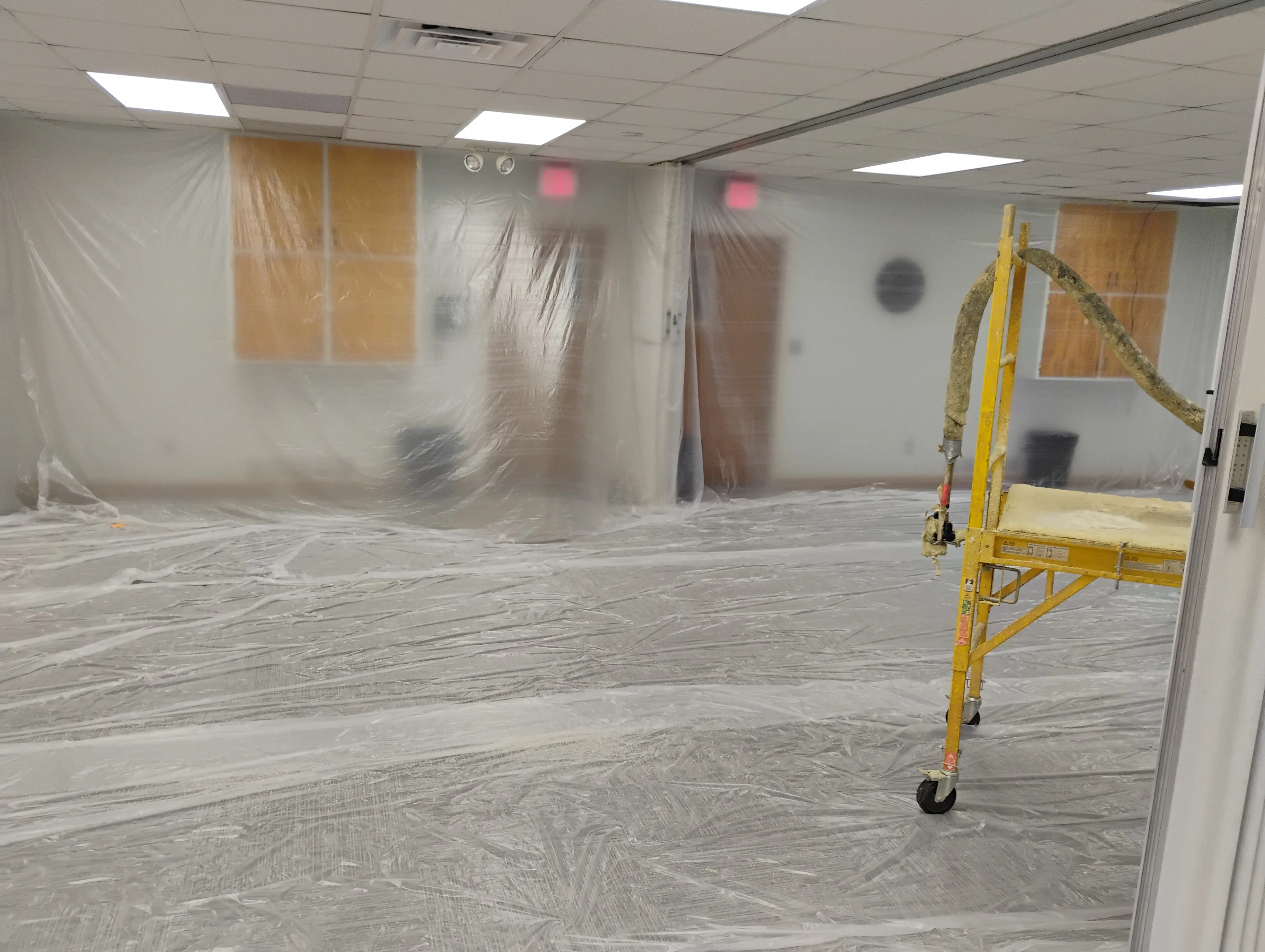
Why Spray Foam?
Spray foam is not just insulation. It can also help control unwanted air movement, which matters in older upstate New York buildings with long heating seasons.
Heat Loss, Air Leakage and Moisture All Matter
Insulation slows heat transfer, but air leakage can carry warm indoor air through gaps, attic bypasses, rim joists and irregular framing. In winter, that can mean drafts, uneven rooms, high heating demand and attic conditions that contribute to ice dams.
Spray foam is a spray-applied plastic that can form a continuous insulation and air sealing barrier on walls, around corners, roofs and other surfaces. That is the useful distinction: spray foam can insulate and air seal in one application when the assembly is appropriate.
The Answer Still Depends on the Assembly
Foam type, placement and thickness should not be chosen by habit. Roof condition, ventilation, existing insulation, bulk water, drying potential and local requirements all affect the right scope.
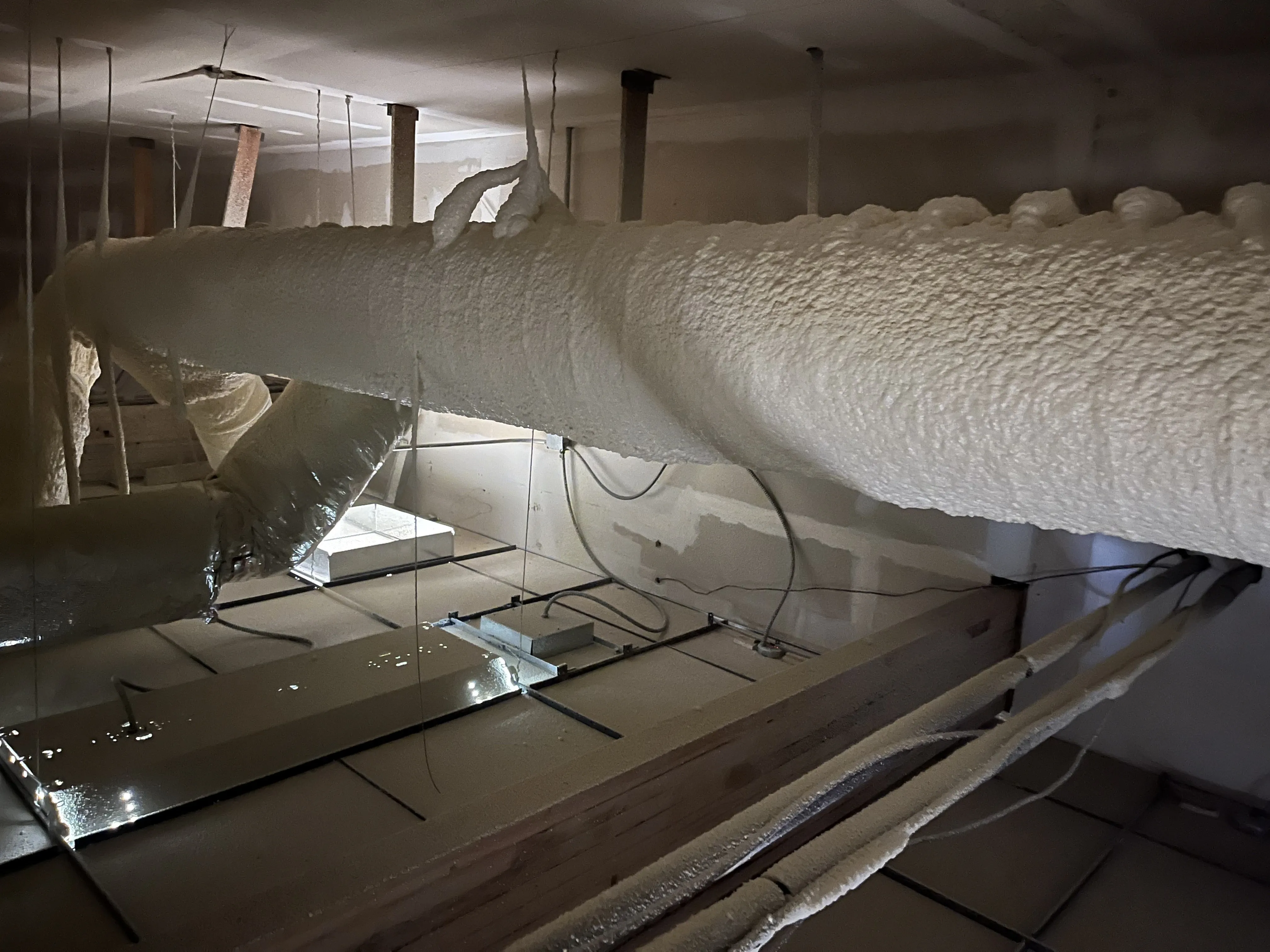
Spray Foam, Fiberglass and Cellulose Do Different Jobs
Spray Foam
- Insulates and can air seal
- Conforms to irregular areas
- Requires professional installation
- Needs assembly-specific moisture review
Fiberglass
- Common batt and loose-fill material
- Primarily thermal insulation
- Can perform well when air sealing is handled separately
- Often used in attics and walls
Cellulose
- Loose-fill or dense-pack applications
- Often used in retrofit cavities
- Can fill irregular spaces
- Air-control strategy depends on the assembly

Where Spray Foam May Make Sense
Good candidates can include attic and roofline work, rim joists, crawlspaces, wall cavities opened during remodeling, pole barns, metal buildings and commercial spaces where air leakage and insulation are both part of the problem.
Where More Evaluation Is Needed
Active roof leaks, damp crawlspaces, unknown ventilation paths, old knob-and-tube wiring, bulk water and concealed wall conditions need review before foam is installed. A contractor should identify those issues rather than bury them behind new material.
Talk to an Insulation ContractorQuestions People Ask Before Choosing Spray Foam
Is spray foam always the best insulation choice?
No. The right insulation depends on the building assembly, moisture strategy, access, budget and project goal.
Does spray foam help with air leakage?
Spray foam expands during installation and can help create an air-control layer where it is correctly applied.
Open-cell or closed-cell foam?
Open-cell and closed-cell foams behave differently. Open-cell is softer and useful for some interior and sound-control applications, while closed-cell is denser and less permeable.
Can spray foam be used in older homes?
Often, yes, but older homes need assessment. Existing moisture, ventilation, wiring, roof condition and access should be reviewed before foam is installed.
Can spray foam help ice dam problems?
It may help when attic air leakage and heat loss are part of the cause. Roof condition, ventilation and existing insulation still need to be evaluated.
You Do Not Have to Diagnose the Building Alone
Tell us about the property and what you are trying to improve.