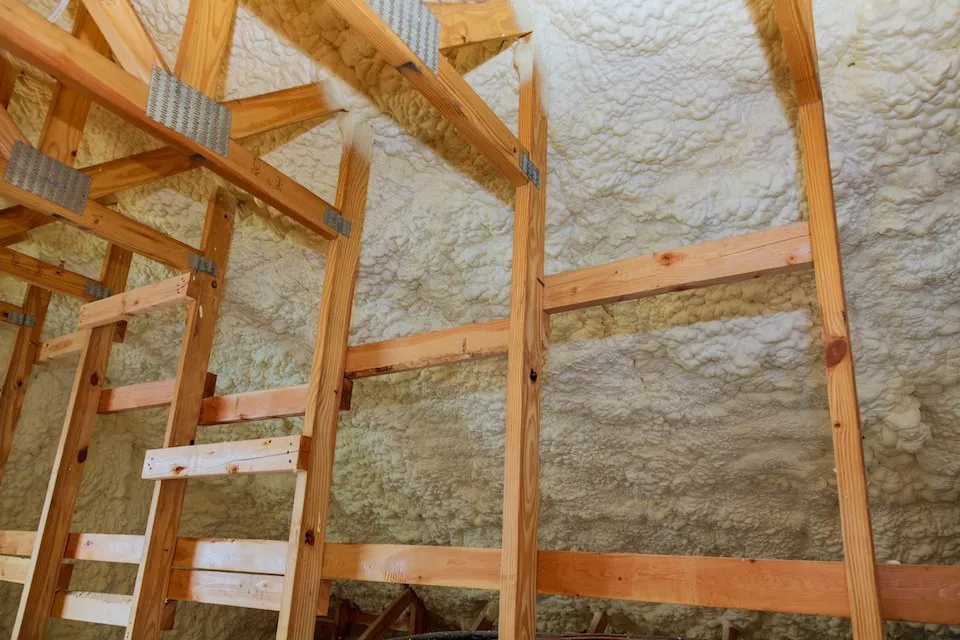
Open Cell Foam Insulation in New York
Soft low density spray foam used mainly for interiors such as attics, basements, wall cavities and crawlspaces, with sound control benefits.
Open Cell Spray Foam Insulation
Open cell foam insulation is a spongy, soft, low density material used mostly for interiors such as attics, basements, wall cavities and crawlspaces. Its structure allows moisture permeability, which can support drying in the right wall or roof assembly.
Open cell foam is often discussed as the lower cost spray foam option and a useful material for reducing airborne noise. That makes it a candidate for interior walls, sound control between rooms and certain attic applications where vapor behavior is understood.
Where Open Cell Fits in New York Homes
In upstate New York, open cell foam is most often discussed for interior cavities where sound reduction and air sealing are priorities and where the assembly can manage moisture safely. It expands into gaps around wiring, plumbing and framing irregularities that are common in older homes.
Open cell is not the default for exterior continuous insulation or damp below grade surfaces. Closed cell foam is denser and less permeable, so it is more often discussed for those conditions.
Open Cell vs Closed Cell
Open-cell foam is typically around R-3.5 to R-3.7 per inch; closed-cell around R-6 to R-7 per inch, per manufacturer specifications. Those figures are general product education, not a project specification.
During an estimate, the choice between open cell and closed cell should be based on the cavity, exposure to bulk water, required R value, budget and whether sound control is part of the goal.
Built Around Cold Weather, Air Leakage and Existing Conditions
Interior cavities
Open-cell foam is commonly discussed for interior walls, rooflines and cavities where the assembly can dry safely.
Sound control
Its softer structure can help with airborne sound when paired with good air sealing and the right wall design.
Drying strategy
Because it is more permeable, open-cell foam needs a clear moisture plan before it is chosen.
Related Insulation Services
Common Questions
Where does open-cell foam usually make sense?
It is often considered for interior cavities, sound-control goals and assemblies where its permeability fits the moisture strategy.
Is open-cell foam the default below grade?
No. Below grade and damp areas need careful review because open-cell foam is more permeable than closed-cell foam.
Why ask about moisture before choosing open-cell foam?
The wall or roof assembly needs a drying path, and the estimate should confirm that before material is selected.
Want to Know What Your Project Needs?
Tell us about the property and we will help you determine the next step.
Free Estimates • Albany, Syracuse and Utica